
Enterprise AI Spending Is Shifting: What the Latest Ramp and OpenRouter Data Tells Buyers
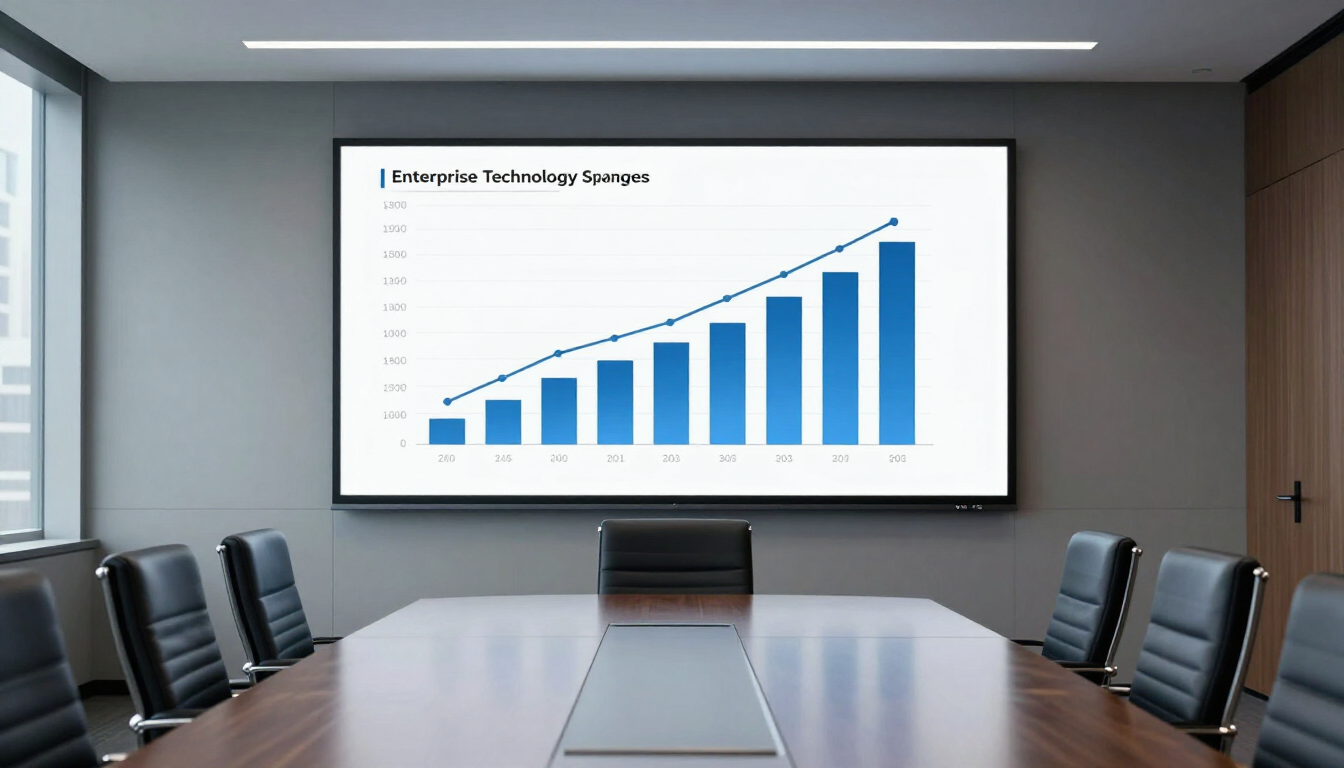
Two data points released around OpenAI's GPT-6 Astra launch have caught the attention of enterprise technology leaders. Ramp spending data cited in Reuters reporting shows Astra reaching roughly 13 percent of enterprise AI spending within weeks of its September 3 debut, against around 8 percent for Anthropic's Claude line. OpenRouter, which routes API traffic across model providers, recorded OpenAI models outspending Anthropic's for the first time in more than two and a half years. OpenAI's annualized revenue run rate reportedly surpassed $40 billion over the same period.
What the Data Actually Measures
Before redrawing vendor strategies, buyers should understand the instruments. Corporate card and expense panels capture where money flows, not why, and they skew toward the early-adopter companies most likely to trial a newly launched flagship. API routing data measures developer experimentation as much as production commitment. Launch-window spikes are real but frequently mean-revert as evaluation cycles complete and workloads settle back to the best cost-performance fit.
The directional signal is still meaningful: a single model release can re-rank enterprise preferences within weeks, something that would have taken quarters in traditional software markets.
Why Share Shifts Happen So Fast
Switching costs in AI are bifurcated. Organizations that access models through an abstraction layer, with prompts, evaluations, and orchestration kept vendor-neutral, can redirect workloads in days. Organizations that hard-coded vendor-specific behaviors, fine-tuning pipelines, or proprietary tool-calling formats into their products face months of re-engineering. The spending data is, in part, a map of which companies built for portability and which did not.
Guidance for Buyers
Resist benchmark-driven vendor churn. Maintain a multi-model architecture with at least two qualified providers for critical workloads, keep evaluation suites portable so new releases can be tested against your own tasks within days, negotiate contract terms that permit model substitution, and track cost per completed task rather than headline token prices, which increasingly diverge from real workload economics.
The Due Diligence Angle
For acquirers evaluating AI-dependent targets, vendor concentration is now an underwriting question. A product whose gross margin depends on a single model provider's pricing, or whose differentiation evaporates when a competitor's next release ships, carries a fragility that belongs in the valuation model. Diligence should map every model dependency, quantify re-platforming costs, and stress-test margins against both price increases and capability commoditization.
Conclusion: Follow Workloads, Not Headlines
Market-share data in AI is a weather report, not a climate model. Buyers who build for portability can treat each release wave as an opportunity to capture better economics; buyers locked to a single vendor will experience the same waves as recurring strategic crises.
